




When someone dies, you may find yourself in a situation where certain estate matters can’t wait for the full probate process to run its course. The deceased’s property may need immediate attention, or legal matters may require an urgent response. In these situations, the Georgia probate court may appoint a temporary administrator to step in with limited authority until a permanent personal representative is appointed.
Understanding how this role works can help you protect your loved one’s estate and avoid costly mistakes during a period of uncertainty.
What Is a Temporary Administrator?
A temporary administrator (also known as an administrator pendente lite) is someone the probate court appoints to step in and handle urgent matters in an estate.
Even though the title sounds short-term, there is typically no set deadline for how long this person can serve. The Temporary Administrator stays in place until a permanent executor or administrator is appointed.
This role doesn’t automatically follow every death, but it is most common in emergency situations.
For example, if a home is about to go into foreclosure, the bank may often refuse to discuss with anyone until the estate is officially opened. If there is not enough time to appoint a permanent representative, the court can name a temporary administrator to give someone legal authority to act.
If you are appointed as a temporary administrator, you should know that this role has its drawbacks. You don’t have the authority to settle the estate or to distribute property to heirs.
The role has very limited powers, being restricted to specific duties authorized by the court. If you need to take additional actions, you must specifically request that power, and the Probate Court must authorize it.
Generally, you are also required to post a bond and comply with the court reporting requirements, including filing an inventory and annual reports if ordered. These obligations cannot be waived.
Steps to Appoint a Temporary Administrator
1. File a petition with the probate court
An interested party files a petition and requests temporary letters of administration. The petition must explain why immediate action is needed.
2. Court review
The probate judge reviews the request, and because a temporary administrator is often appointed in emergency situations where quick action is required, the court may act without the extended notice procedures required in permanent appointments. Some courts still require notice procedures to appoint a temporary administrator; this can vary by county.
3. Issuance of Temporary Letters of Administration
If approved, the court issues Temporary Letters of Administration and enters a written order defining the powers granted.
4. Posting Bond (if required)
The appointed temporary administrator must post bond as required by the court before exercising authority.
Only after the court issues temporary letters does the temporary administrator have legal authority to act on behalf of the estate, and they can only act within the scope of what the court has ordered.
What Is a Temporary Administration Order?
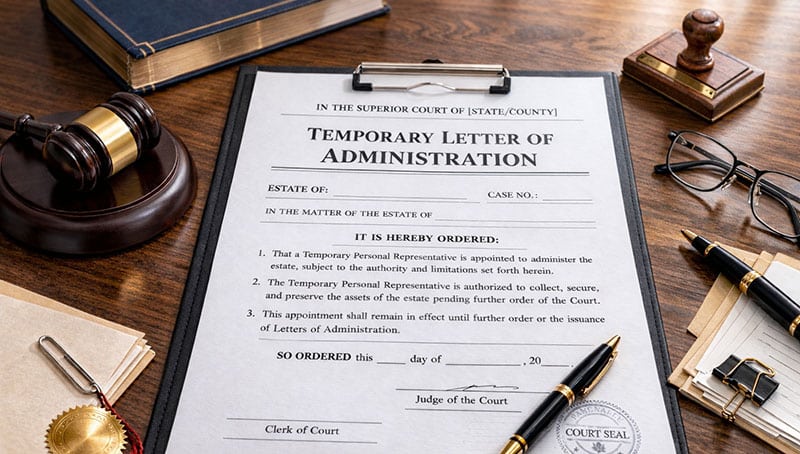
This is a written document issued by the probate court appointing a temporary administrator and defining the scope of authority. Under Georgia probate law, the probate judge may grant temporary letters of administration to safeguard estate property.
The order will typically:
- Name the temporary administrator if the court determines the person is suitable and qualified to serve in this role.
- Define the exact powers granted.
- Limit authority to the listed powers.
- State that the appointment remains in effect until a permanent executor (if there is a will) or administrator (if the deceased dies intestate) is selected.
Once the court appoints a permanent personal representative, the temporary administrator must transfer all estate assets, records, and responsibilities as directed.
Why Is a Temporary Administrator Appointed?
Temporary administration is used when waiting for the normal probate process could pose a risk to the estate.
Common situations include:
- Disputes among family members over who should serve as personal representative.
- A named executor who is unavailable, unwilling, or unable to act right away.
- Urgent financial or legal pressure that requires immediate attention.
- The need for a legally recognized authority to deal with banks and other institutions.
The purpose of the appointment is to maintain stability, not to serve as a substitute for the full estate administration.
Powers of the Temporary Administrator
The temporary administrator’s powers depend entirely on what the probate court grants in its order and are typically limited to actions needed to protect the estate’s interests.
Collect and secure the deceased’s estate property
- Take the legal control of the decedent’s assets, including real estate, vehicles, and personal belongings.
- If authorized, access bank accounts and financial assets titled solely in the late person’s name.
- Gather financial records and other documents they need to identify and collect estate property.
Maintain and preserve estate assets (if authorized by court order)
- Arrange necessary maintenance and repair.
- Pay essential expenses such as utilities, insurance premiums, or required loan payments.
- Cover the funeral expenses when the court allows it.
- Make payments required to prevent immediate loss or financial harm, such as foreclosure or repossession.
- Take reasonable steps to prevent loss, waste, or theft of estate property.
Manage the ongoing businesses of the deceased (if granted)
When the late person owned a business, the court may allow limited steps to keep the business operating and preserve its value.
Handle legal matters (with court approval)
The temporary administrator may be permitted to initiate or respond to legal proceedings to protect estate property or to prevent imminent financial harm. This authority is typically restricted and must fall within the terms of the court’s order.
Reporting to the probate court
- Report actions taken on behalf of the estate
- Provide an accounting or file a probate inventory if required.
Can a Temporary Administrator Become Permanent?

No, a temporary appointment doesn’t automatically convert to a permanent one.
If you are currently serving as a temporary administrator and wish to continue, you must petition the court and go through the formal probate appointment process.
The probate judge will follow Georgia’s standard procedures:
- If your loved one died testate, the judge may appoint the named executor and issue Letters Testamentary.
- If there is no will, the court may appoint an administrator and issue letters of administration.
When making this decision, the court applies Georgia’s statutory priority rules and also gives interested parties the opportunity to object. Full authority begins only after the court issues permanent letters.
How to Contest an Appointed Temporary Administrator?
If you believe a temporary administrator is unable to serve or was wrongly appointed, you may contest them in probate court.
To object, you must have legal standing. In general, this includes:
- Heirs of the deceased.
- Beneficiaries named in the will.
- Estate creditors.
- Any other party with a financial interest in the estate.
Your objection must be based on legally valid grounds, such as:
- Lack of qualification.
- Conflict of interest.
- Misuse or mismanagement of estate property.
- Acting beyond the authority granted by the probate court.
- Ignoring statutory priority rules.
To contest the appointment, you would typically need to file a written objection stating your legal reasons and request a hearing if necessary.
After reviewing the evidence, the judge may:
- Keep the temporary administrator in place.
- Limit or change the granted powers.
- Remove the administrator and appoint someone else.
Consulting a probate lawyer can help you evaluate your position and follow the proper procedure.
Next Steps
If you are dealing with a situation that may require a temporary administrator or have concerns about this appointment, speaking with a probate attorney may help you understand your rights and responsibilities and avoid legal disputes. If you need guidance, contact our office at (770) 692-5530 to schedule a consultation. To learn more first, download our Georgia Probate Handbook to better understand how the estate works and what to expect.
More information
Disclaimer These websites have not been reviewed by Georgia Probate Law Group and are not endorsed or even recommended by Georgia Probate Law Group. These websites are additional resources that you can use to further your general education on this topic.
Disclaimer: The information above is provided for general information only and should not be considered legal advice. Our probate attorneys provide legal advice to our clients after talking about the specific circumstances of the client’s situation. Our law firm cannot give you legal advice unless we understand your situation by talking with you. Please contact our law office to receive specific information about your situation.